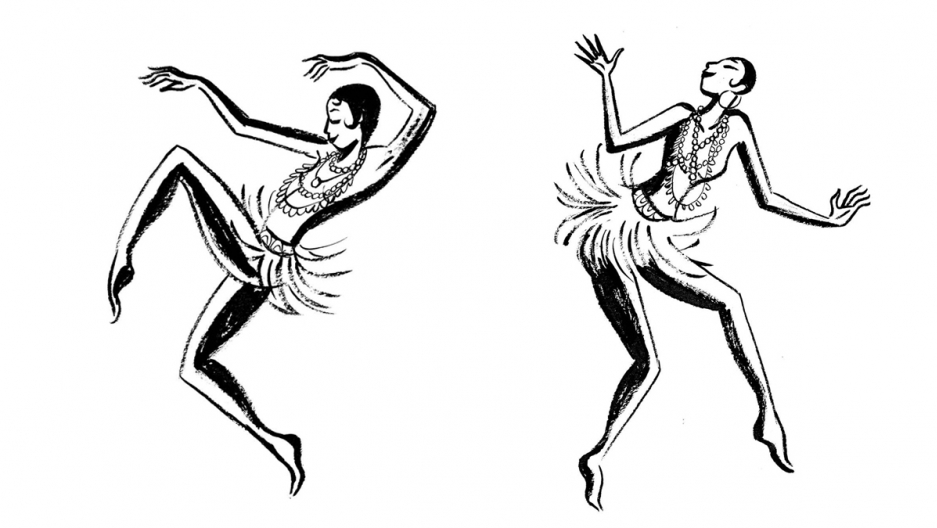
Listening to the body starts with being quiet and then finding balance and alignment through deep focus and stillness. Always begin with grounding, alignment, and balance work. Walking, dancing, or running—no matter what movement form you do, start from a neutral and aligned position. You will move forward with grace and ease.
Those funny faraway feet. Why do you start with your feet in parallel position? This creates perfect alignment and balance. Always build your muscle strength on an aligned platform. It is beneficial for your entire skeletal framework and posture. This position also prevents the wearing down of the ankles, knees, and arches of the feet because they are evenly supporting the body’s weight.
Your feet are the farthest body part from the head, so your mind has to work to stay focused on the feet. Your attention doesn’t fly down there like a butterfly. Your mind connects with the nerves in your feet, then sends the message back through the nervous system to your brain. This type of deep feeling awareness keeps your mind from drifting off to distracting thoughts that can result in you disengaging from your body.
At home, try dancing barefoot to just four songs, listening with your feet—let them guide you. They will hear the beat and translate the music without you having to tell them what to do. This reestablishes rhythm, which many people think they do not have. Then you can dance with no mind, just focus.
It may be you love music…but feel you don’t have rhythm. If you have a heartbeat, you have rhythm. —Mickey Hart, drummer for the Grateful Dead
Even toes have a purpose. They are not just for stuffing into the ends of shoes but provide balance as they adapt and respond to the contours of the ground. Get used to feeling your feet and their shape against the floor.
You may find that your ankles feel frozen solid—almost fused to the foot, but they, like all parts of your body, respond quickly to attention and stimulation.
I think the feet have a sense of humor. I ask students to pretend they are standing on stage in front of a large audience. When the curtain rises, all that is visible are their feet because the curtain only goes up to their knees. Their dancing feet have to entertain the audience, so they better get creative and not just do the same step, over and over again. This is one way to get out of the box of repetitive, conservative dance movements.
The feet also have vision. In The Teachings of Don Juan: A Yaqui Way of Knowledge, author Carlos Castañeda learns how to walk in the dark and see with his feet as if they have eyes. I experienced this in the Galapagos Islands in Ecuador on a late-night hike over the lava fields to a bay where hammerhead sharks bred. We crossed a jagged, uneven surface with no moon (or flashlight) to light the way. We walked two hours in and two hours out. I never looked down and just let my feet guide me.
This takes trust. In order to trust your feet, you have to be connected to them. Befriend your feet and free them from the prison of shoes and cramped movement. Imagine they are cat paws kissing the ground lightly as you dance your way through life.
The hand dance. The hands are a very expressive part of your body, but most Americans hold their hands tight and cramped, close to the torso, unlike in Latin cultures that use their hands to gesticulate. I encourage you to free your hands while you dance.
Equal movement. Most of us do not have equal movement ability through both sides of our body. It is important to integrate the left and right sides of your body. This affects not only your dance skills, but your balance and strength. Many times, repetitive injuries happen on the side of the body that you are less connected to. The hand dance mentioned above is an excellent way to weave together the movements of the two sides of the body.
You can fly. Symphony conductors live longer than people in any other profession. Why? They use swooping, passionate hand and arm gestures that work the heart muscle. You can build strength in your arms and ease the tension that builds up in the shoulders and trapezius (upper back). The practice below can teach you to lift your arms using the lateral back muscles, just like a bird when it flaps its wings. This adds tremendous grace to the movement and builds a strong back. It is also a natural way to eliminate flabby underarms.
The above exercise can be altered to practice while driving:
Freeing the hips and pelvis. Many people are completely locked up in their hip and pelvic region, which causes stiff movements. But you gotta use your hips to dance!
A surgeon once told me that the stair-climbing exercise machines commonly found in gyms were his best friend. They sent him lots of overzealous workout people who had ground down their hip sockets through repetitive movement. Try the practice below to get those hips in gear.
Oiling the joints. Believe me, your body doesn’t get any less stiff as you age. We all need well-greased joints—think of the Tin Man in the Wizard of Oz. Below is a dynamic and simple joint-rotation exercise that warms your body from the ground up.
The importance of knees. We all want our knees to last our entire lives so we can move and dance freely without being restricted by pain and surgeries. What a problem this can be for many weekend dance and exercise warriors! Alignment while you are in movement is crucial to the health of the cartilage, ligaments, and tendons in your knees.
Always have your knees facing the same direction as your feet. Why do you think tennis or soccer players suffer so many knee injuries? Fast lateral or sideways movements, where the knee and foot aren’t in alignment, can cause tears in the ligaments.
Dancing the kundalini & unwinding the snake: Much of any dance warmup has to do with loosening, lengthening, and strengthening the spinal cord. Many Eastern religions believe that the life force is coiled at the base of the spine. One name given to this energy is kundalini. Many yogic practices are based on releasing this potent surge upward to the brain, which is reputed to increase your spiritual awareness.
Practice aware dance movements that focus on you enlivening your spinal cord, which I believe enhances the flow of spinal fluid to the brain. This keeps your spine limber and the discs healthy. This also improves your posture, strengthens back muscles, prevents pinched nerves and arthritis in the vertebrae, and possibly staves off osteoporosis.
Aside from the physical benefits, this practice is a way to increase the circulation and awakening of your kundalini.
Daylight dancing. Dancing is usually considered an evening pastime: bonfires and dance halls, night clubs and parties. Dancing in the dark is more mysterious. Inhibitions are loosened by low light and exhibition is fueled by alcohol. Boundaries are hazier. People are less self-conscious if they can’t be seen so easily as in the stark light of an early Sunday morning.
One of my favorite times to dance is on either Saturday or Sunday mornings at the local Open Floor in Marin County, situated just north of San Francisco over the Golden Gate Bridge. I’ve got lots of energy, and because it is not a club scene, I can stretch and do whatever my body feels like without a partner. We are all just there to dance: eyes open or eyes shut, stretched out like a crawling crocodile on the floor or leaping about like Nureyev. There is nothing better than being soaking wet from dancing before 10 a.m.!
An entire global network of ecstatic dance communities exists, from Paris to Hawai’i, Toronto to Bulgaria. Dances are open to the public and usually held on weekend mornings. It is a great way to meet your local dance tribe or connect with new friends when you are traveling. See the resources listed below to find these dances.
Freeing Your Spirit with Dance
Dance as prayer. Pray to be connected to the life force that runs through everything. Pray to express this electrical joy in subtle and physical ways. Bring this vibrant life force into your body and give it form through your unique dance. It could be movements so subtle that only your fingers slightly ripple, or it could take you into leaps and bounds of expansive expression.
Dance is for every body! I encourage you to wake up to dance, not only for exercise and social interaction, but to add freeform dance to your repertoire of healing tools and give shape to the mystery of life that dances within all of us.
Leave a Reply